
By newarkmerchantservices December 23, 2025
Minimizing decline rates is a huge concern among many merchants in Newark, particularly as more and more people are opting for electronic payment options. These avoidable declines lead to lost sales, frustrated customers, and extra work for merchants. Knowledge about why these problems occur and how they can be corrected can aid in minimizing these decline rates and creating a smooth customer experience for the merchant.
What Is an AVS Mismatch?
An AVS mismatch will occur if a customer provides a different address at the point of payment compared to what is stored by the issuer. AVS stands for Address Verification System. AVS is primarily utilized within a card-not-present transaction, which includes online payments, telephone payments, and others. While making a payment, customers will be asked to provide an address, which will be verified by a bank. If everything is correct, an AVS match will be displayed on a payment transaction. However, if there is a small variation in an address, such as a street number and ZIP code, this will display an AVS mismatch.
Benefits and Drawbacks of the AVS Payment System for Business Transactions
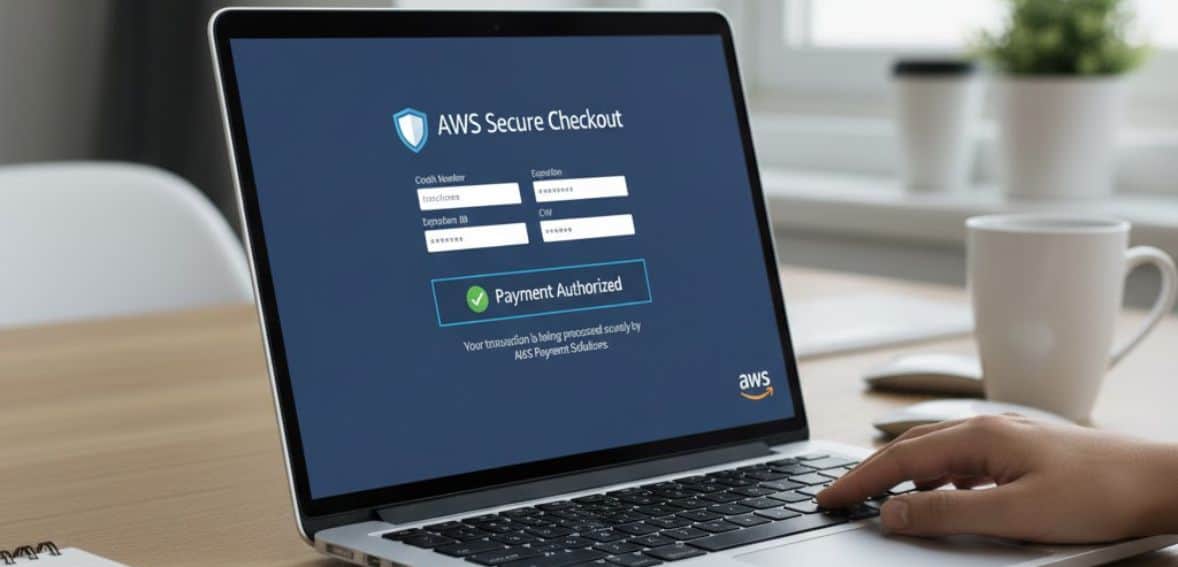
If you take online payments, then a system like AVS might prove to be extremely useful for minimizing chargebacks and reducing online fraud. It is vital for every business to realize that unless basic checks for fraud are implemented, then they are likely to be exposed to stolen card payments, lost revenue, increased chargebacks, and potentially even lose a merchant account.
While processing a payment, AVS asks the credit card holder to input their billing address. This way, AVS verifies whether the person attempting to make the purchase is indeed the rightful owner of the credit card. For example, if the credit card number has already been stolen and is being used on the Internet, the person attempting to commit the fraud needs to have the correct address information as well, which helps to combat chargebacks.
When a cardholder sees a charge from a foreign company or a company he or she does not recognize, it automatically triggers a dispute for a chargeback.
Another benefit offered by this system is speed. It operates in real time while a customer is undergoing authorization and does not delay payments if details are entered correctly. From the perspective of a customer, there are no delays in check-out, which is a factor that boosts sales conversion.
Thirdly, cost can also be a reason for many merchants choosing AVS. The cost is generally very low, as it can be easily used with most payment gateways.
However, the negative aspect of AVS is that it does not have the capability to detect all kinds of fraud. Therefore, in case the fraudster already has the entire address information of the cardholder, the transaction can proceed successfully. Which is why it is always best to use AVS in combination with other solutions.
AVS may also prevent authenticated payments. Customers can change their residence, but may fail to update the billing information with the credit card company. As a result, an authenticated payment may fail.
Lastly, false declines sometimes result in customer complaints. Although the purpose of the AVS is the security of the business as well as the security of the credit card holder, customers will feel irritated if they are unable to make their payments successfully. This sometimes causes customers to post negative reviews.
How to Fix an Avs Mismatch Error?

To fix an AVS mismatch error, it is essential to balance against fraud while retaining customers. If it is an existing or loyal customer, you may choose to approve the payment processing after reviewing the details, keeping in mind that this decision depends on your comfort level with the risk. If there appears to be confusion, it might be helpful to contact a customer, particularly where a simple phone call or electronic message for their billing address resolves a simple error, such as a typo or a previous bill address subject to correction.
Additionally, it may be worth checking your criteria for AVS filters. It is possible, for instance, that overly tight criteria exist for a business, potentially causing it to lose customers, while a payment processor with flexible and reliable methods for criteria for an AVS filter strikes a perfect balance between strict security checks and a smooth process for customers.
AVS Mismatch Error Codes Chart
Code | Visa | Mastercard | American Express | Discover |
A | Correct street number, incorrect ZIP code | Correct street number and ZIP code | Correct street number and ZIP code | Correct street number, incorrect ZIP code |
B | Correct street number, ZIP code not verified | N/A | N/A | N/A |
C | Street number and ZIP code not verified | N/A | N/A | N/A |
D | Correct street number and ZIP code (international) | N/A | N/A | N/A |
E | AVS invalid or not allowed for this card | N/A | N/A | N/A |
F | Correct street number and postcode (UK) | N/A | Correct street number, incorrect cardmember name | N/A |
G | Non-US bank, AVS not supported | N/A | N/A | N/A |
I | Street number not verified (international transaction) | N/A | N/A | N/A |
K | N/A | N/A | Correct cardmember name | N/A |
L | N/A | N/A | Correct cardmember name and ZIP code | N/A |
M | Correct street number and postal code (international) | N/A | Correct cardmember name, street number, and ZIP code | N/A |
N | Incorrect street number and ZIP code | Incorrect street number and ZIP code | Incorrect street number and ZIP code | Incorrect street number and ZIP code |
O | N/A | N/A | Correct cardmember name and street number | N/A |
P | Street number and ZIP code not verifiable (international) | N/A | N/A | N/A |
R | AVS unavailable, retry later | AVS unavailable, retry later | AVS unavailable, retry later | AVS unavailable, retry later |
S | AVS not supported | AVS not supported | AVS not supported | AVS not supported |
T | N/A | N/A | N/A | Correct 9-digit ZIP code, incorrect street number |
U | Street number unavailable | Street number unavailable | Street number unavailable | Street number unavailable |
W | Correct 9-digit ZIP code, incorrect street number | Correct 9-digit ZIP code, incorrect street number | Incorrect cardmember name, ZIP code, and street number | Correct 9-digit ZIP code, incorrect street number |
X | Correct 9-digit ZIP code and street number | Correct 9-digit ZIP code and street number | N/A | Correct 9-digit ZIP code and street number |
Y | Correct 5-digit ZIP code and street number | Correct 5-digit ZIP code and street number | Correct 5-digit ZIP code and street number | Correct 5-digit ZIP code and street number |
Z | Correct 5-digit ZIP code, incorrect street number | Correct 5-digit ZIP code, incorrect street number | Correct 5-digit ZIP code, incorrect street number | Correct 5-digit ZIP code, incorrect street number |
Soft Declines vs Hard Declines

Payment denials commonly exist in one of two forms, a hard denial and a soft denial. They serve different purposes and call for a different response by the merchant.
Hard declines are experienced when the issuing bank of the card disables the payment completely. This is usually the case when the card has been reported lost or stolen, or the account is closed. This is a permanent error. It means the payment or transaction cannot be attempted once the error is encountered. This means the customer must make the payment using another card or contact the bank to sort out the issue.
On the other hand, soft declines, also referred to as soft errors, are mostly temporary. In fact, most declined payments actually fall into this category. Soft declines can occur due to the bank requiring additional verification, the transaction appearing to be suspicious, or even the cardholder reaching a daily spending limit, or a temporary technical glitch. In these instances, the issue causing the problem is not permanent, which means the transaction can very likely go through once the issue has been resolved, such as when the transaction is retried or when the authentication or waiting period has completed.
Common Soft Decline Types and Practical Ways to Recover Them
Soft declines occur when a transaction authorization happens due to a reason that isn’t long-term in nature and can be resolved with quick action. These declines do not mean the customer is unable or unwilling to pay, as it often involves issues related to timing, card status, or technical checks, which can be resolved without a hitch.
One of the most common soft failures that occur is due to a lack of funds. This means that the customer does not have a sufficient amount of money at the point of payment. In this case, instead of considering this as a final payment failure, smart retry logic can be employed to retry the payment again at a convenient time, hopefully later that day, with sufficient funds.
For a subscription payment, a gentle nudge reminding the customer to add funds to his/her account by modifying his/her payment information will go a long way in avoiding this error.
Secondly, another common soft decline cause can be an expired card. Customers tend to forget to update their payment information after a new card has been received, particularly for subscription and saved-card payments. An account updater service can be used as a helpful facility for customers, with businesses able to update card information when it requires replacement, and banks issuing new cards.
Payment can also fail if the card being used has some restrictions in place. Some cards, for example, corporate or government cards, are restricted from using particular types of transaction categories. If this is the case, then a clear explanation to the customer that their card has some usage restrictions would be necessary. Suggesting that they contact their bank to lift this restriction should resolve this problem while still providing them with a convenient alternative to complete their purchase or transaction.
However, there are situations where the payment fails as a result of technical issues that are beyond the control of the consumer. There might be timeouts as a result of system delays and network issues that involve payment processors. In most cases, waiting for some time before resubmitting the payment could successfully allow the payment to go through. Most successful businesses use another processor as a means of ensuring the success of the payment.
The Real Impact of Soft Declines on Revenue and the Operations of Businesses
Soft declines can subtly damage a company in ways that most merchants cannot even imagine. Each soft decline represents an attempted payment that failed. Without an effective way to recover funds, this money is essentially left on the table.
This added cost can have an effect beyond revenue; one failed payment could temporarily block a renewal, lock out access to a service, and even cause the customer to terminate the relationship altogether. A single payment issue could escalate into loss of revenue and increased customer loss in the long term.
To illustrate just how powerful a recovered payment can be, consider an online retailer receiving, on average, 50,000 soft declines per month, with an average transaction value of £50. This represents a lost potential revenue stream of £2.5 million. However, if this retailer is successful in recovering just 20 percent of these payments, £500,000 is recovered.
A change from 20 percent to 70 percent adds another £1.25 million each month. The source of improvement is only from dealing with failed payments and not from gaining more customers or more transactions.
However, the collection of soft declines does not come for free. Repeat attempts and retries could become expensive if not managed well. There are rules on the number of times a transaction attempt can be retried. Visa, for example, provides 15 retry attempts within 30 days for temporary conditions such as insufficient fund errors, as well as errors caused by technology. Attempting too many retry attempts may incur additional charges. This can become a costly venture for large-volume merchants.
Conclusion
Payment declines do not have to be a regular occurrence for Newark merchants. Most failed payments are soft declines or AVS mismatches, which only require more effective approaches to payments and system configurations for resolution.
Introducing smart retry solutions, effective communication with customers, and effective fraud solution methods are some effective approaches for a business to increase successful payments without creating hurdles for customers during the payment process.
Implementing a proactive approach for payment optimization is essential for a business not only to safeguard revenue but also to build customer confidence and optimize the payment experience for customers.
FAQs
What is the soft decline in payment?
This is an occasional failure of payment, which could be resolved by retrying or correcting payment information.
How does AVS help to combat fraud?
AVS verifies billing address information to ensure card ownership and to prevent unauthorized card-not-present transactions.
Why do legitimate payments often fail due to AVS?
Transactions can often fail if the customer provides the wrong address or if the customer’s card company information is outdated.
Can soft declines be recovered automatically?
Yes, intelligent retry solutions and customer notifications can resolve most soft decline transactions.
Should Newark merchants use AVS with other tools?
Certainly, the combination of AVS, retries, and authentication functions will increase approval ratios while having highly efficient anti-fraud protection.